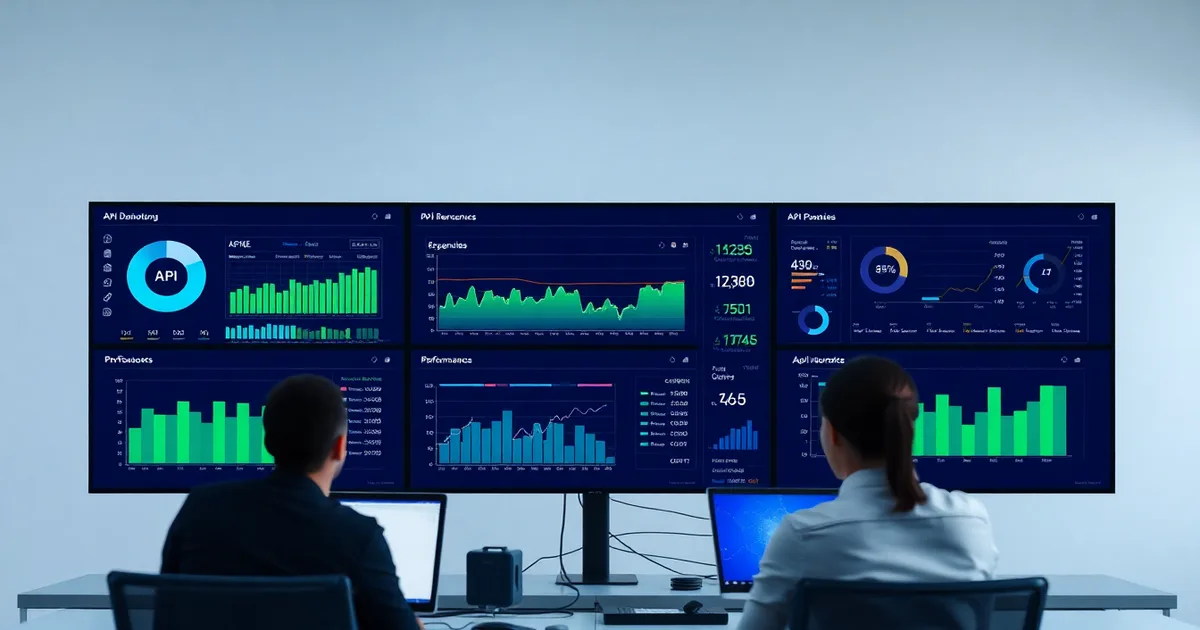
API monitoring tools are essential software platforms that continuously track, analyze, and alert developers about API performance, uptime, and functionality issues. In 2026, businesses rely on robust API ecosystems more than ever, making comprehensive monitoring solutions critical for maintaining service reliability, user experience, and business continuity. The best API monitoring tools provide real-time insights, automated testing, detailed analytics, and proactive alerting to prevent downtime and optimize performance.
Key Takeaways:
- API monitoring tools are crucial for maintaining 99.9%+ uptime and optimal performance in 2026
- Leading solutions offer real-time monitoring, synthetic testing, and comprehensive analytics
- Pricing ranges from free tiers to enterprise solutions costing $500+ monthly
- Essential features include multi-location monitoring, custom alerts, and detailed reporting
- Integration capabilities with existing development workflows are increasingly important
What Are API Monitoring Tools and Why Do You Need Them?
API monitoring tools are specialized software solutions designed to continuously observe and evaluate the performance, availability, and functionality of Application Programming Interfaces (APIs). These platforms simulate real user interactions, track response times, monitor error rates, and provide comprehensive insights into API health and performance metrics.
In today's interconnected digital landscape, APIs serve as the backbone of modern applications, enabling seamless data exchange between different systems, services, and platforms. A single API failure can cascade into widespread service disruptions, affecting user experience and business operations.
Modern businesses typically rely on dozens or even hundreds of APIs, from payment processors and authentication services to data analytics and third-party integrations. Without proper monitoring, issues can go undetected until they impact end users, potentially resulting in revenue loss, damaged reputation, and decreased customer satisfaction.
How Do API Monitoring Tools Work in 2026?
Contemporary API monitoring tools employ several sophisticated techniques to ensure comprehensive coverage and accurate performance assessment:
Synthetic Monitoring
Synthetic monitoring involves automated scripts that simulate real user interactions with APIs at regular intervals. These synthetic transactions test various endpoints, methods, and scenarios to identify potential issues before they affect actual users.
Real User Monitoring (RUM)
RUM collects data from actual API calls made by real users, providing insights into genuine performance patterns, geographic variations, and usage trends. This approach offers authentic performance data but requires actual traffic to generate meaningful insights.
Multi-Location Testing
Leading API monitoring tools deploy monitoring nodes across multiple geographic locations, enabling organizations to understand performance variations across different regions and identify location-specific issues.
Intelligent Alerting
Advanced alerting systems use machine learning algorithms to reduce false positives and provide contextual information about detected issues. These systems can differentiate between temporary fluctuations and genuine problems requiring immediate attention.
What Are the Essential Features of Top API Monitoring Tools?
When evaluating API monitoring tools for your organization, several key features distinguish professional-grade solutions from basic monitoring options:
- Real-time Performance Monitoring: Continuous tracking of response times, throughput, and error rates
- Comprehensive Test Coverage: Support for REST, GraphQL, SOAP, and WebSocket APIs
- Custom Alert Configuration: Flexible alerting rules based on various performance thresholds
- Detailed Analytics Dashboard: Intuitive interfaces displaying performance trends and insights
- Integration Capabilities: Seamless connection with popular development tools and workflows
- Historical Data Analysis: Long-term performance trend analysis and capacity planning
- Security Monitoring: Detection of security vulnerabilities and suspicious activities
- API Documentation Testing: Validation of API documentation accuracy and completeness
Professional developers and teams working on comprehensive testing strategies often integrate API monitoring tools with their existing quality assurance workflows to ensure consistent performance across all application layers.
Which API Monitoring Tools Lead the Market in 2026?
Enterprise-Grade Solutions
Datadog API Monitoring continues to dominate the enterprise market with its comprehensive observability platform. The solution offers advanced synthetic monitoring, real-user monitoring, and deep integration with cloud infrastructure. Pricing starts at $15 per host monthly, with enterprise features available in higher-tier plans.
New Relic API Monitoring provides robust performance tracking with exceptional visualization capabilities. The platform excels in correlating API performance with application performance, offering developers comprehensive insights into system behavior. Their pricing model is consumption-based, typically ranging from $99 to $549 monthly depending on data ingestion.
AppDynamics API Monitoring specializes in application performance management with sophisticated API monitoring capabilities. The solution provides business-impact analysis, helping organizations understand how API performance affects revenue and user experience.
Developer-Focused Platforms
Postman Monitoring has evolved from a simple API testing tool into a comprehensive monitoring platform. Its strength lies in seamless integration with development workflows, allowing teams to convert existing API tests into monitoring scenarios effortlessly.
Insomnia Monitoring offers intuitive API monitoring with excellent GraphQL support. The platform appeals to developers who prioritize user experience and workflow efficiency over extensive enterprise features.
Pingdom API Monitoring provides reliable uptime monitoring with global monitoring locations. While not as feature-rich as enterprise solutions, it offers excellent value for small to medium-sized organizations.
Specialized and Emerging Solutions
Several specialized API monitoring tools have gained traction in 2026, particularly among startups and development teams seeking cost-effective solutions. Platforms like AppBull often feature these emerging tools at significant discounts, making advanced monitoring capabilities accessible to smaller organizations.
How to Choose the Right API Monitoring Tool for Your Organization?
Selecting the appropriate API monitoring tool requires careful consideration of your organization's specific requirements, technical constraints, and budget limitations. The decision process should involve multiple stakeholders, including developers, operations teams, and business decision-makers.
Assess Your Monitoring Requirements
- API Complexity: Consider the number of APIs, request volumes, and types of APIs (REST, GraphQL, etc.)
- Geographic Coverage: Determine monitoring locations based on user distribution
- Integration Needs: Evaluate compatibility with existing tools and workflows
- Scalability Requirements: Consider future growth and monitoring needs
Evaluate Technical Capabilities
Different API monitoring tools excel in different areas. Some prioritize comprehensive feature sets, while others focus on simplicity and ease of use. Consider how each tool aligns with your team's technical expertise and operational preferences.
Organizations implementing low-code development approaches may benefit from monitoring tools that offer visual configuration options and simplified setup processes.
Consider Total Cost of Ownership
API monitoring tool costs extend beyond monthly subscription fees. Consider implementation time, training requirements, and ongoing maintenance when evaluating total cost of ownership.
What Are the Current Pricing Models for API Monitoring Tools?
API monitoring tool pricing has evolved significantly in 2026, with vendors adopting various models to accommodate different organizational needs and usage patterns.
| Tool Category | Pricing Range | Key Features | Best For |
|---|---|---|---|
| Free/Basic Tiers | $0 - $29/month | Basic monitoring, limited checks | Startups, small projects |
| Professional Plans | $30 - $199/month | Advanced features, team collaboration | Growing businesses, development teams |
| Enterprise Solutions | $200 - $1000+/month | Full feature set, priority support | Large organizations, mission-critical APIs |
Many organizations find value in exploring marketplace platforms where premium monitoring tools are available at reduced rates, making enterprise-grade solutions accessible to smaller teams and budgets.
How to Implement API Monitoring Best Practices in 2026?
Successful API monitoring implementation requires strategic planning, proper tool configuration, and ongoing optimization. Following established best practices ensures maximum value from your monitoring investment.
Strategic Planning Phase
- Inventory Critical APIs: Identify and prioritize APIs based on business impact
- Define Success Metrics: Establish clear performance benchmarks and SLA requirements
- Plan Monitoring Coverage: Determine appropriate monitoring frequency and geographic distribution
- Design Alert Strategies: Create escalation procedures and notification preferences
Implementation Best Practices
- Start with Critical Endpoints: Begin monitoring your most important APIs before expanding coverage
- Configure Realistic Thresholds: Set alert thresholds based on actual performance baselines
- Implement Gradual Rollout: Deploy monitoring incrementally to avoid overwhelming teams
- Test Alert Mechanisms: Verify that alerts reach appropriate team members reliably
- Document Procedures: Create clear documentation for incident response and escalation
Teams managing complex development workflows often benefit from integrating API monitoring with their broader project management systems to ensure monitoring activities align with development schedules and release cycles.
What Emerging Trends Are Shaping API Monitoring in 2026?
The API monitoring landscape continues evolving rapidly, driven by technological advances and changing organizational needs. Several key trends are reshaping how organizations approach API monitoring and performance management.
AI-Powered Anomaly Detection
Machine learning algorithms increasingly power intelligent monitoring systems that can identify unusual patterns and predict potential issues before they impact users. These systems reduce alert fatigue while improving detection accuracy.
Integrated Security Monitoring
Modern API monitoring tools incorporate security monitoring capabilities, detecting suspicious activities, unauthorized access attempts, and potential vulnerabilities. This integration reflects the growing importance of API security in overall cybersecurity strategies.
Organizations prioritizing comprehensive security approaches often combine API monitoring with robust security plugins and practices across their entire technology stack.
Enhanced Developer Experience
Monitoring tools increasingly focus on developer experience, offering better integration with development environments, simplified setup processes, and more intuitive interfaces. This trend reflects the recognition that effective monitoring requires active developer engagement.
Cost Optimization Features
Advanced monitoring platforms now include cost analysis features, helping organizations understand the financial impact of API performance and identify optimization opportunities. These features become particularly valuable as API usage scales.
How to Measure ROI from API Monitoring Tools?
Demonstrating return on investment from API monitoring tools requires tracking both direct cost savings and indirect business benefits. Organizations should establish measurement frameworks before implementing monitoring solutions.
Direct Cost Benefits
- Reduced Downtime Costs: Calculate revenue protected through faster issue resolution
- Decreased Support Costs: Measure reduction in customer support tickets related to API issues
- Improved Operational Efficiency: Quantify time saved through automated monitoring and alerting
- Prevented SLA Violations: Calculate penalties avoided through proactive monitoring
Indirect Business Benefits
While harder to quantify, indirect benefits often provide the most significant long-term value. These include improved customer satisfaction, enhanced developer productivity, better capacity planning, and increased system reliability.
What Common Challenges Should You Avoid When Implementing API Monitoring?
Organizations frequently encounter predictable challenges when implementing API monitoring solutions. Understanding these common pitfalls helps ensure successful monitoring deployments.
Alert Fatigue and Over-Monitoring
Excessive alerting leads to team burnout and reduced responsiveness to genuine issues. Configure alerts thoughtfully, focusing on actionable problems rather than every minor fluctuation.
Insufficient Monitoring Coverage
Many organizations focus solely on uptime monitoring while neglecting performance, security, and functional testing. Comprehensive monitoring requires attention to multiple dimensions of API health.
Poor Integration with Existing Workflows
Monitoring tools that don't integrate well with existing development and operations workflows often face low adoption rates and limited effectiveness.
Inadequate Historical Data Retention
Short data retention periods limit the ability to perform trend analysis and capacity planning. Ensure your chosen solution provides adequate historical data storage.
Practical Implementation Checklist for API Monitoring Success
Use this comprehensive checklist to ensure successful API monitoring implementation in your organization:
Pre-Implementation Planning
- Conduct comprehensive API inventory and risk assessment
- Define clear performance benchmarks and SLA requirements
- Identify key stakeholders and establish communication protocols
- Evaluate budget constraints and select appropriate tools
- Plan integration with existing development and operations workflows
Tool Selection and Setup
- Compare features, pricing, and scalability of leading solutions
- Conduct proof-of-concept testing with shortlisted tools
- Configure monitoring parameters based on established benchmarks
- Set up appropriate alert thresholds and notification channels
- Implement necessary integrations with existing tools
Deployment and Optimization
- Deploy monitoring for critical APIs first
- Test alert mechanisms and escalation procedures
- Train team members on monitoring tools and procedures
- Monitor effectiveness and adjust configurations as needed
- Expand monitoring coverage based on initial results
Ongoing Management
- Regularly review and update monitoring configurations
- Analyze performance trends and identify optimization opportunities
- Conduct periodic reviews of alert effectiveness
- Update monitoring coverage as APIs evolve
- Measure and report on monitoring ROI
Organizations can often find significant cost savings on premium monitoring tools through digital marketplaces like AppBull, which regularly features developer tools and monitoring solutions at substantial discounts.
Future-Proofing Your API Monitoring Strategy
As API ecosystems continue growing in complexity and importance, monitoring strategies must evolve to address emerging challenges and opportunities. Forward-thinking organizations should consider several factors when planning their long-term monitoring approaches.
The integration of artificial intelligence and machine learning into monitoring platforms will continue advancing, providing more sophisticated anomaly detection, predictive analytics, and automated response capabilities. Organizations should evaluate tools based on their AI roadmaps and innovation trajectories.
Cloud-native architectures and microservices adoption will drive demand for more granular monitoring capabilities and better service mesh integration. Consider how potential monitoring tools align with your architectural evolution plans.
Regulatory compliance requirements may expand to include more specific API monitoring and data protection mandates. Ensure your chosen monitoring approach can adapt to evolving compliance landscapes.
Conclusion
The API monitoring tools landscape in 2026 offers unprecedented sophistication and variety, enabling organizations of all sizes to implement comprehensive monitoring strategies. Success depends on careful tool selection, thoughtful implementation, and ongoing optimization aligned with business objectives.
The most effective API monitoring approaches combine robust technical capabilities with strong integration into existing workflows and clear business value demonstration. Whether you choose enterprise-grade solutions or emerging platforms, focus on tools that provide actionable insights and support your team's specific needs.
As API ecosystems continue expanding in scope and criticality, investing in quality monitoring tools becomes increasingly essential for maintaining competitive advantage and ensuring exceptional user experiences. The key lies in selecting solutions that balance current requirements with future scalability and innovation potential.