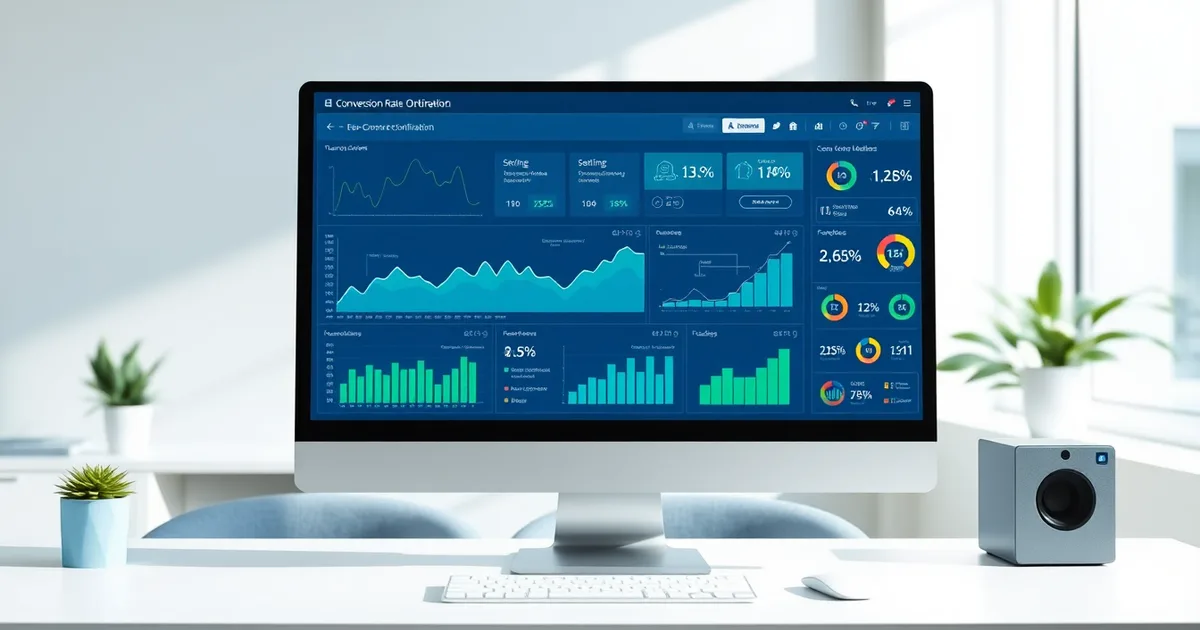
Conversion rate optimization (CRO) tools are essential software solutions that help businesses analyze user behavior, test different website elements, and systematically improve the percentage of visitors who complete desired actions on their websites. In 2026, the e-commerce landscape has become increasingly competitive, making effective conversion rate optimization more critical than ever for sustainable business growth. Modern CRO tools combine advanced analytics, AI-powered insights, and sophisticated testing capabilities to help businesses maximize their return on investment from existing traffic.
Key Takeaways: TL;DR Summary
- Essential CRO Categories: A/B testing platforms, heatmap analytics, user session recording, and personalization engines are the core tool types
- Top 2026 Tools: Optimizely, VWO, Hotjar, Google Optimize 360, and Unbounce lead the market with advanced AI features
- Budget Considerations: Free tools like Google Analytics 4 and Microsoft Clarity offer substantial value for startups
- ROI Focus: Best tools typically deliver 20-30% conversion improvements within 90 days of implementation
- Integration Priority: Choose tools that seamlessly integrate with your existing e-commerce platform and marketing stack
What Are Conversion Rate Optimization Tools and Why Do They Matter in 2026?
Conversion rate optimization tools are specialized software platforms designed to help businesses understand how visitors interact with their websites and identify opportunities to increase conversions. These tools have evolved significantly since 2024, now incorporating machine learning algorithms and predictive analytics to provide more accurate insights and recommendations.
The importance of CRO tools has intensified in 2026 due to several market factors. Customer acquisition costs have increased by an average of 38% across most industries, making it more expensive to drive new traffic to websites. Meanwhile, consumer expectations for personalized, seamless online experiences have reached new heights, with 89% of users abandoning websites that don't meet their usability standards within the first 15 seconds.
Modern CRO tools address four fundamental business challenges:
- Identifying conversion bottlenecks through detailed user behavior analysis
- Testing multiple variations of website elements simultaneously
- Personalizing user experiences based on demographics, behavior, and preferences
- Measuring and attributing conversion improvements to specific optimizations
How Do A/B Testing Platforms Drive E-commerce Success?
A/B testing platforms form the backbone of most conversion optimization strategies. These tools allow businesses to create multiple versions of web pages, product listings, or checkout processes and systematically determine which variations perform better with real users.
Optimizely continues to dominate the enterprise A/B testing market in 2026, offering advanced statistical modeling and AI-powered test recommendations. Their new "Conversion Intelligence" feature automatically identifies the most impactful elements to test based on your industry and user behavior patterns. Pricing starts at $2,000 monthly for the Growth plan.
VWO (Visual Website Optimizer) provides an excellent middle-ground solution with robust testing capabilities and intuitive visual editors. Their 2026 platform update includes enhanced mobile optimization features and improved integration with popular e-commerce platforms like Shopify and WooCommerce. Plans begin at $299 monthly.
Google Optimize 360 remains the go-to choice for businesses heavily invested in the Google ecosystem. The platform's seamless integration with Google Analytics 4 and Google Ads provides comprehensive conversion tracking and audience targeting capabilities. Enterprise pricing is available upon request.
Essential A/B Testing Features to Look For:
- Statistical Significance Calculators: Ensure test results are mathematically valid
- Multivariate Testing: Test multiple elements simultaneously for complex optimizations
- Audience Segmentation: Target specific user groups with tailored experiences
- Mobile-First Testing: Optimize for mobile users who represent 70%+ of e-commerce traffic
- Real-Time Results: Monitor test performance and make data-driven decisions quickly
Which User Behavior Analytics Tools Provide the Best Insights?
Understanding how users interact with your website is crucial for identifying conversion optimization opportunities. User behavior analytics tools provide visual representations of user actions, helping businesses discover friction points and optimization possibilities that traditional analytics might miss.
Hotjar has maintained its position as the leading heatmap and session recording platform through 2026. Their latest updates include AI-powered "Insight Discovery" that automatically identifies unusual user behavior patterns and potential conversion barriers. The tool's heatmaps show exactly where users click, scroll, and spend time on your pages. Pricing starts at $99 monthly for the Plus plan.
FullStory offers comprehensive digital experience analytics with powerful search and segmentation capabilities. Their "Conversion Funnels" feature helps identify exactly where users drop off in the purchasing process, while "Rage Click" detection highlights areas causing user frustration. Enterprise pricing is available through custom quotes.
Microsoft Clarity provides surprisingly robust analytics capabilities completely free of charge. The platform includes heatmaps, session recordings, and conversion funnel analysis without any traffic limits or data sampling. This makes it an excellent choice for startups and small businesses working with limited budgets.
Key Metrics to Monitor with Behavior Analytics:
- Scroll Depth: How far users scroll down your pages
- Click Tracking: Most and least clicked elements on your pages
- Form Analytics: Which form fields cause abandonment
- Session Duration: How long users engage with your content
- Exit Pages: Where users most commonly leave your site
These insights become even more valuable when combined with effective project management tools that help your team prioritize and implement optimization changes systematically.
What Makes Personalization Engines Essential for Modern E-commerce?
Personalization engines use artificial intelligence and machine learning to deliver customized experiences to individual website visitors. In 2026, personalization has become a competitive necessity rather than a nice-to-have feature, with personalized experiences driving an average 19% increase in sales.
Dynamic Yield (now part of Mastercard) leads the enterprise personalization market with sophisticated AI algorithms that analyze user behavior in real-time. Their platform can personalize product recommendations, content, pricing, and even website layouts based on individual user profiles. The system learns from each interaction to continuously improve personalization accuracy.
Optimizely Personalization integrates seamlessly with their A/B testing platform, allowing businesses to test personalized experiences against control groups. This approach provides clear ROI measurement for personalization efforts. The platform excels at behavioral targeting and can create personalized experiences based on traffic source, device type, geographic location, and past purchase history.
Adobe Target offers enterprise-level personalization with advanced machine learning capabilities. Their "Auto-Target" feature automatically delivers the best experience to each visitor based on their individual profile and real-time behavior. The platform integrates deeply with other Adobe Experience Cloud products for comprehensive customer journey optimization.
| Personalization Platform | Best For | Key Feature | Starting Price | Implementation Time |
|---|---|---|---|---|
| Dynamic Yield | Large E-commerce | AI-Powered Recommendations | Custom Quote | 4-6 weeks |
| Optimizely Personalization | Mid-Market | Testing Integration | $2,000/month | 2-4 weeks |
| Adobe Target | Enterprise | Auto-Target ML | Custom Quote | 6-8 weeks |
| Monetate | Retail | Product Recommendations | $1,500/month | 3-5 weeks |
How Can Landing Page Optimization Tools Improve Conversion Rates?
Landing page optimization tools focus specifically on creating and testing dedicated pages designed to convert visitors from specific traffic sources. These tools are particularly valuable for businesses running paid advertising campaigns or email marketing campaigns where traffic lands on custom pages.
Unbounce remains the market leader for drag-and-drop landing page creation with built-in conversion optimization features. Their "Smart Traffic" AI automatically routes visitors to the landing page variant most likely to convert them based on their characteristics. The platform includes over 125 mobile-responsive templates optimized for different industries and conversion goals.
Leadpages offers an excellent balance of ease-of-use and powerful features. Their 2026 platform update includes advanced lead magnet tools and integrated CRM capabilities. The "Leadboxes" feature creates pop-up opt-in forms that can increase conversion rates by up to 30% when properly implemented.
Instapage focuses on post-click optimization with advanced personalization and collaboration features. Their "AdMap" technology automatically matches landing page content to specific ad campaigns, ensuring message consistency throughout the customer journey. This approach typically improves conversion rates by 15-25% compared to generic landing pages.
Critical Landing Page Elements to Optimize:
- Headlines: Clear, benefit-focused messaging that matches visitor expectations
- Call-to-Action Buttons: Prominent, action-oriented text with contrasting colors
- Forms: Minimal required fields with clear value propositions
- Social Proof: Customer testimonials, reviews, and trust indicators
- Page Speed: Fast loading times across all devices and connection speeds
What Role Do Analytics and Attribution Tools Play in CRO?
Analytics and attribution tools provide the data foundation that makes conversion rate optimization possible. These platforms track user interactions, measure conversion events, and help businesses understand which optimization efforts are actually driving results.
Google Analytics 4 has matured significantly since its 2020 launch and now provides robust conversion tracking and attribution modeling. The platform's "Enhanced E-commerce" features track the complete customer journey from first website visit through purchase completion. Custom conversion events and goals can be configured to measure specific business objectives.
Adobe Analytics offers enterprise-level data collection and analysis with advanced segmentation capabilities. Their "Attribution IQ" feature helps businesses understand how different marketing channels and website interactions contribute to conversions. The platform excels at cross-device tracking and customer lifetime value analysis.
Mixpanel focuses on event-based analytics that track specific user actions rather than just page views. This approach provides deeper insights into user behavior and makes it easier to identify conversion bottlenecks. Their "Funnel Analysis" feature shows exactly where users drop off in multi-step processes like checkout flows.
Modern analytics platforms integrate well with development workflows, especially when combined with automated testing tools that ensure conversion tracking continues to work properly as websites evolve.
Which Free and Budget-Friendly CRO Tools Deliver Real Value?
Small businesses and startups don't need expensive enterprise tools to begin conversion rate optimization. Several free and affordable tools provide substantial value for businesses with limited budgets.
Google Optimize (free version) provides basic A/B testing capabilities with direct integration to Google Analytics. While it lacks advanced features like multivariate testing and advanced targeting, it's sufficient for small businesses beginning their CRO journey. The tool supports up to 5 simultaneous experiments and integrates seamlessly with Google Ads.
Microsoft Clarity offers completely free heatmaps, session recordings, and basic analytics without any usage limits. The platform provides insights comparable to paid tools like Hotjar, making it an excellent starting point for budget-conscious businesses.
Sumo provides free pop-up and opt-in form tools that can immediately improve email capture rates. Their free plan supports unlimited pageviews and includes basic targeting options. Upgrading to paid plans unlocks advanced targeting and A/B testing for forms.
Budget-Friendly CRO Strategy:
- Start with Free Tools: Use Google Analytics 4, Microsoft Clarity, and Google Optimize to establish baselines
- Focus on High-Impact Areas: Optimize checkout processes and key landing pages first
- Leverage Existing Platforms: Many e-commerce platforms include built-in CRO features
- Graduate Gradually: Invest in paid tools as you prove ROI from optimization efforts
Platforms like AppBull often feature discounted CRO tools and plugins that provide enterprise-level functionality at startup-friendly prices, making it easier for smaller businesses to access advanced optimization capabilities.
How Should You Choose the Right CRO Tool Stack for Your Business?
Selecting the optimal combination of conversion rate optimization tools depends on your business size, technical resources, budget constraints, and specific optimization goals. The key is building a cohesive stack that provides comprehensive insights without overwhelming your team with data.
For Small E-commerce Businesses (under $1M revenue):
- Google Analytics 4 for basic conversion tracking
- Microsoft Clarity for user behavior insights
- Google Optimize for simple A/B testing
- Sumo for email capture optimization
- Your e-commerce platform's built-in features
For Growing Businesses ($1M-$10M revenue):
- VWO or Optimizely for advanced testing
- Hotjar for comprehensive behavior analytics
- Unbounce for dedicated landing pages
- Klaviyo or similar for email personalization
- Custom analytics integration
For Enterprise Operations ($10M+ revenue):
- Optimizely or Adobe Target for enterprise testing
- Dynamic Yield for AI-powered personalization
- Adobe Analytics or similar for advanced attribution
- Custom development resources
- Dedicated CRO team and tools
Tool Selection Criteria:
- Integration Capabilities: Ensure tools work with your existing technology stack
- Ease of Implementation: Consider technical resources required for setup and maintenance
- Scalability: Choose tools that can grow with your business
- Support Quality: Evaluate training resources and customer support options
- ROI Measurement: Select tools that clearly demonstrate their impact on conversions
What Are the Latest CRO Trends and Technologies in 2026?
The conversion rate optimization landscape continues evolving rapidly in 2026, driven by advances in artificial intelligence, changing user behaviors, and new privacy regulations. Understanding these trends helps businesses stay competitive and adopt tools that will remain relevant.
AI-Powered Automatic Optimization has become mainstream, with tools like Optimizely's "Program Management" and VWO's "SmartStats" making optimization decisions without human intervention. These systems analyze thousands of data points to automatically adjust website elements for optimal conversion rates.
Privacy-First Analytics has gained importance following expanded privacy regulations. Tools like Plausible and Fathom Analytics provide website insights without collecting personally identifiable information, helping businesses maintain compliance while still optimizing conversions.
Voice and Visual Search Optimization is emerging as voice commerce grows. CRO tools are beginning to incorporate voice interaction analytics and visual search optimization features to help businesses capture these new traffic sources.
These technological advances often require updated database management solutions to handle the increased volume and complexity of user data being collected for optimization purposes.
Emerging CRO Technologies to Watch:
- Predictive Analytics: Tools that forecast user behavior and preemptively optimize experiences
- Real-Time Personalization: Instant content adaptation based on current user actions
- Cross-Device Attribution: Better tracking of user journeys across multiple devices
- Emotional Analytics: Tools that measure emotional responses to website elements
- Augmented Reality Integration: CRO for AR shopping experiences
How Can You Measure the ROI of Your CRO Tool Investment?
Measuring the return on investment from conversion rate optimization tools requires establishing clear baselines, tracking the right metrics, and attributing improvements to specific tools and strategies. Most businesses see positive ROI from CRO tools within 90 days when implemented properly.
Key Performance Indicators to Track:
| Metric | Calculation | Target Improvement | Measurement Frequency |
|---|---|---|---|
| Conversion Rate | Conversions ÷ Total Visitors | 20-30% increase | Weekly |
| Average Order Value | Total Revenue ÷ Number of Orders | 10-15% increase | Monthly |
| Customer Lifetime Value | Average Purchase × Purchase Frequency × Customer Lifespan | 25-40% increase | Quarterly |
| Cost Per Acquisition | Marketing Spend ÷ New Customers | 15-25% decrease | Monthly |
| Revenue Per Visitor | Total Revenue ÷ Total Visitors | 30-50% increase | Monthly |
ROI Calculation Framework:
- Establish Baseline Metrics: Measure performance for at least 30 days before implementing CRO tools
- Track Tool Costs: Include subscription fees, implementation costs, and staff time
- Measure Incremental Revenue: Calculate additional revenue generated from conversion improvements
- Account for External Factors: Consider seasonal variations, marketing changes, and market conditions
- Calculate Net ROI: (Incremental Revenue - Tool Costs) ÷ Tool Costs × 100
Advanced CRO Implementation Tips:
- Start with Quick Wins: Focus on high-traffic pages with obvious optimization opportunities
- Test Continuously: Run ongoing experiments rather than one-time optimizations
- Segment Your Analysis: Different user groups may respond differently to optimizations
- Document Everything: Keep detailed records of tests, results, and learnings
- Invest in Training: Ensure your team understands how to use CRO tools effectively
- Monitor Technical Performance: Use API monitoring tools to ensure CRO implementations don't impact site speed
What Common CRO Tool Implementation Mistakes Should You Avoid?
Even the best conversion rate optimization tools can fail to deliver results if implemented incorrectly. Understanding common mistakes helps businesses maximize their CRO tool investments and avoid wasting time on ineffective strategies.
Testing Without Statistical Significance is one of the most frequent errors. Many businesses make decisions based on small sample sizes or short testing periods that don't provide reliable results. Most meaningful A/B tests require at least 1,000 conversions per variation and should run for minimum 2-4 weeks to account for weekly behavior patterns.
Focusing Only on Conversion Rate without considering other important metrics can lead to poor business outcomes. A test that increases conversion rate but decreases average order value might actually reduce total revenue. Always evaluate the complete impact of optimizations on business goals.
Implementing Too Many Tools Simultaneously can create data conflicts and make it difficult to attribute improvements to specific changes. Start with 2-3 core tools and gradually expand your stack as you demonstrate success and build internal expertise.
CRO Implementation Best Practices:
- Develop Hypotheses: Base tests on specific theories about user behavior rather than random changes
- Prioritize by Impact: Focus on changes that could significantly affect your primary conversion goals
- Maintain Test Documentation: Record test parameters, results, and learnings for future reference
- Consider Mobile First: Optimize for mobile users who represent the majority of traffic
- Test One Variable at a Time: Isolate changes to understand what's actually driving improvements
When building your CRO strategy, consider how optimization efforts integrate with your broader development workflow, including tools for data extraction and analysis that can provide additional insights into user behavior patterns.
The conversion rate optimization landscape in 2026 offers unprecedented opportunities for businesses to improve their online performance through data-driven strategies and advanced tools. Whether you're a startup working with free tools or an enterprise implementing comprehensive CRO platforms, the key to success lies in systematic testing, continuous learning, and focusing on user experience improvements that drive meaningful business results. Marketplaces like AppBull provide access to many of these optimization tools at competitive prices, making it easier for businesses of all sizes to build effective CRO strategies that deliver measurable ROI.