Server monitoring tools have become indispensable for maintaining robust IT infrastructure in 2026. These monitoring tools provide real-time visibility into server performance, track uptime metrics, and alert administrators to potential issues before they impact business operations. From small startups to enterprise organizations, the right server monitoring solution can mean the difference between seamless operations and costly downtime incidents.
Key Takeaways
- Comprehensive Coverage: Modern monitoring tools track CPU, memory, disk, network, and application-level metrics
- Proactive Alerting: AI-powered anomaly detection prevents issues before they cause outages
- Cost Efficiency: Every minute of downtime costs businesses an average of $9,000 in 2026
- Multi-Platform Support: Best tools support cloud, on-premises, and hybrid environments
- Integration Capabilities: Seamless integration with DevOps workflows and incident management systems
What Are Server Monitoring Tools and Why Do You Need Them?
Server monitoring tools are software applications designed to continuously observe and analyze the performance, availability, and health of servers and IT infrastructure components. These tools collect metrics, generate alerts, and provide detailed insights into system behavior to help administrators maintain optimal performance.
In 2026, the complexity of modern IT environments has made manual monitoring nearly impossible. Organizations manage hybrid cloud infrastructures, microservices architectures, and distributed systems that require constant oversight. Without proper monitoring tools, issues can cascade quickly, leading to significant business disruptions.
The financial impact of server downtime continues to grow. According to recent industry reports, the average cost of IT downtime has increased to $9,000 per minute in 2026, making proactive monitoring not just a technical necessity but a business imperative.
How Do Modern Monitoring Tools Prevent Infrastructure Failures?
Contemporary server monitoring solutions employ advanced technologies to predict and prevent infrastructure failures before they occur. Machine learning algorithms analyze historical performance data to identify patterns and anomalies that might indicate impending issues.
These tools implement several key strategies for failure prevention:
- Predictive Analytics: AI models analyze trends to forecast potential hardware failures
- Threshold-Based Alerting: Automated notifications when metrics exceed predefined limits
- Anomaly Detection: Machine learning identifies unusual behavior patterns
- Correlation Analysis: Systems identify relationships between different metrics and events
- Automated Remediation: Self-healing capabilities that can resolve common issues automatically
The integration of these technologies has reduced mean time to resolution (MTTR) by an average of 65% compared to traditional reactive monitoring approaches. Organizations using advanced monitoring tools report 99.9% or higher uptime rates.
What Are the Essential Features to Look for in Server Monitoring Tools?
When evaluating server monitoring tools in 2026, several critical features distinguish enterprise-grade solutions from basic alternatives. Understanding these capabilities helps organizations make informed decisions that align with their infrastructure requirements.
Real-Time Performance Metrics
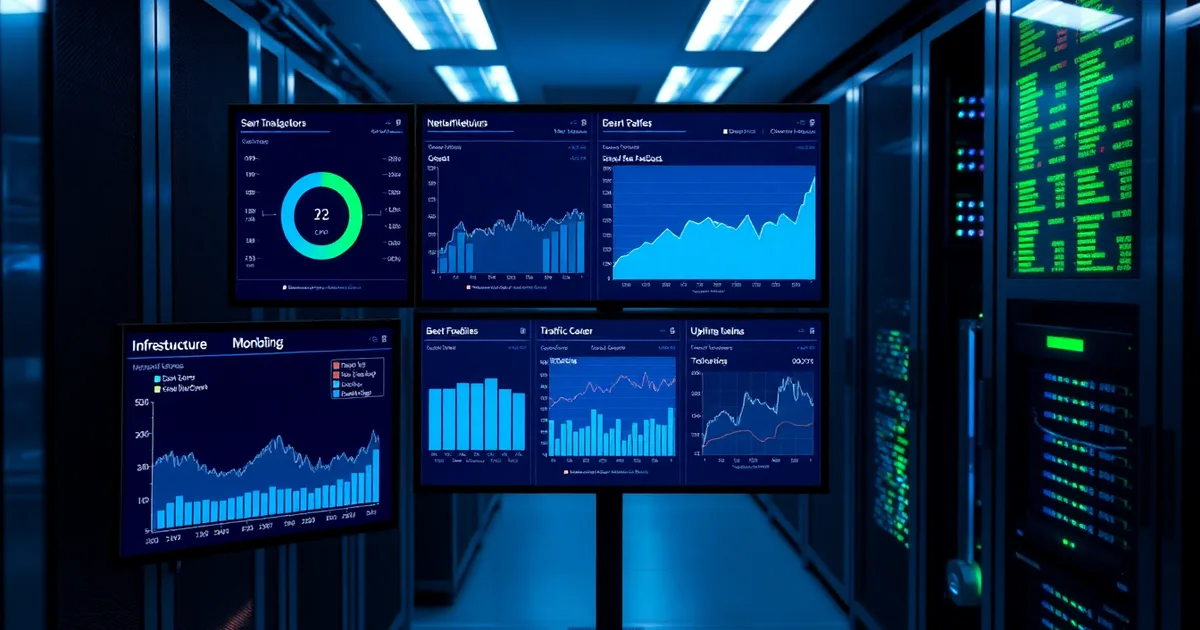
Comprehensive monitoring tools must track essential system metrics in real-time. This includes CPU utilization, memory usage, disk I/O, network traffic, and application-specific metrics. The best solutions provide sub-second granularity for critical metrics and maintain historical data for trend analysis.
Multi-Platform Compatibility
Modern IT environments span multiple platforms and cloud providers. Effective monitoring tools support:
- Windows and Linux servers
- Cloud platforms (AWS, Azure, Google Cloud)
- Container environments (Docker, Kubernetes)
- Virtualization platforms (VMware, Hyper-V)
- Database systems (MySQL, PostgreSQL, MongoDB)
Intelligent Alerting Systems
Alert fatigue remains a significant challenge for IT teams. Advanced monitoring tools implement smart alerting mechanisms that reduce noise while ensuring critical issues receive immediate attention. This includes alert correlation, escalation procedures, and integration with communication platforms like Slack and Microsoft Teams.
Which Server Monitoring Tools Lead the Market in 2026?
The server monitoring landscape in 2026 features several standout solutions, each offering unique strengths for different organizational needs. These tools have evolved to address the complexities of modern infrastructure while maintaining ease of use and cost-effectiveness.
Enterprise-Grade Solutions
Datadog continues to dominate the enterprise monitoring space with its comprehensive infrastructure monitoring platform. The solution excels in cloud-native environments and offers extensive integration capabilities with over 500 technologies. Its AI-powered anomaly detection and automated root cause analysis make it particularly valuable for large-scale deployments.
New Relic has strengthened its position with enhanced observability features that extend beyond traditional server monitoring. The platform's unified approach to infrastructure, application, and user experience monitoring provides holistic visibility into system performance.
Splunk Infrastructure Monitoring leverages the company's data analytics expertise to provide deep insights into infrastructure performance. Its machine learning capabilities excel at identifying complex patterns across distributed systems.
Cost-Effective Alternatives
For organizations seeking powerful monitoring capabilities at lower price points, several solutions offer excellent value. Platforms like AppBull often feature discounted licenses for these tools, making enterprise-grade monitoring more accessible to smaller teams.
Zabbix remains a popular open-source option that provides comprehensive monitoring capabilities without licensing costs. Its flexibility and customization options make it suitable for organizations with specific requirements.
PRTG Network Monitor offers an intuitive interface with powerful monitoring capabilities, particularly strong for network infrastructure monitoring alongside server metrics.
How to Choose the Right Monitoring Tool for Your Infrastructure?
Selecting the optimal server monitoring solution requires careful evaluation of your organization's specific needs, technical requirements, and budget constraints. The decision process should involve multiple stakeholders and consider both current and future infrastructure plans.
Assess Your Infrastructure Complexity
Begin by cataloging your current infrastructure components and their monitoring requirements. Consider:
- Server Count and Types: Physical servers, virtual machines, and cloud instances
- Application Architecture: Monolithic applications vs. microservices
- Geographic Distribution: Single location vs. multi-region deployments
- Compliance Requirements: Industry-specific monitoring and reporting needs
- Team Size and Expertise: Available resources for tool management and maintenance
Evaluate Integration Requirements
Modern monitoring tools must integrate seamlessly with existing workflows and tools. Consider compatibility with your current stack, including container orchestration platforms, incident management systems, and development tools.
Integration with business intelligence platforms becomes increasingly important as organizations seek to correlate infrastructure performance with business metrics.
| Infrastructure Size | Recommended Tool Type | Key Considerations | Typical Budget Range |
|---|---|---|---|
| 1-10 servers | SaaS solutions | Ease of setup, basic alerting | $50-200/month |
| 10-100 servers | Hybrid solutions | Scalability, integration capabilities | $200-1000/month |
| 100+ servers | Enterprise platforms | Advanced analytics, custom dashboards | $1000+/month |
| Complex distributed | Observability platforms | Full-stack visibility, AI capabilities | Custom pricing |
What Are the Latest Trends in Server Monitoring for 2026?
The server monitoring landscape continues evolving rapidly, driven by advances in artificial intelligence, cloud technologies, and changing infrastructure patterns. Understanding these trends helps organizations future-proof their monitoring investments.
AI-Powered Observability
Artificial intelligence has transformed monitoring from reactive alerting to proactive problem prevention. Modern monitoring tools incorporate machine learning algorithms that can predict failures, automatically adjust thresholds, and provide context-aware insights.
Natural language processing capabilities now allow administrators to query monitoring data using conversational interfaces, making complex analytics accessible to non-technical stakeholders.
Edge Computing Monitoring
The proliferation of edge computing deployments has created new monitoring challenges. Organizations need visibility into distributed infrastructure that may operate in low-connectivity environments. Modern monitoring tools address these requirements with:
- Local data collection and analysis capabilities
- Bandwidth-optimized data transmission
- Offline operation support
- Centralized management with distributed execution
Security-Integrated Monitoring
The convergence of infrastructure monitoring and security monitoring continues accelerating. Modern tools increasingly incorporate security event monitoring, vulnerability scanning integration, and threat detection capabilities alongside traditional performance metrics.
This integration aligns with the growing emphasis on DevSecOps practices and the need for comprehensive visibility into both performance and security aspects of infrastructure. Organizations can benefit from solutions that combine infrastructure monitoring with vulnerability scanning tools for holistic security posture management.
How to Implement Server Monitoring Tools Effectively?
Successful implementation of server monitoring tools requires careful planning, phased deployment, and ongoing optimization. Organizations that follow structured implementation approaches achieve better results and faster time-to-value.
Planning Phase
Effective monitoring implementation begins with comprehensive planning that involves all relevant stakeholders. This phase should establish clear objectives, success metrics, and implementation timelines.
- Define Monitoring Objectives: Establish specific goals for uptime, performance, and incident response
- Inventory Infrastructure: Document all systems, applications, and dependencies
- Establish Baselines: Measure current performance metrics to set realistic thresholds
- Design Alert Strategies: Create escalation procedures and notification preferences
- Plan Integration Points: Identify connections with existing tools and workflows
Deployment Best Practices
Phased deployment minimizes disruption while allowing teams to learn and adjust configurations based on real-world usage. Start with non-critical systems to test configurations and refine alerting rules before expanding to production environments.
Agent deployment should prioritize security and minimal performance impact. Modern monitoring tools typically consume less than 1% of system resources, but proper configuration ensures optimal efficiency.
What Common Mistakes Should You Avoid When Selecting Monitoring Tools?
Organizations frequently encounter pitfalls during the monitoring tool selection and implementation process. Recognizing these common mistakes helps teams make better decisions and avoid costly missteps.
Over-Engineering Solutions
Many organizations select overly complex monitoring tools that exceed their actual requirements. This leads to higher costs, longer implementation times, and reduced adoption rates among team members. Start with essential capabilities and expand functionality as needs evolve.
Neglecting Integration Requirements
Isolated monitoring tools create information silos that reduce operational efficiency. Ensure selected tools integrate with existing workflows, including code repository platforms, deployment pipelines, and incident management systems.
Insufficient Alert Configuration
Poorly configured alerting leads to either alert fatigue or missed critical issues. Invest time in properly calibrating thresholds, implementing alert correlation, and establishing clear escalation procedures.
- Set appropriate threshold values based on historical data
- Implement alert dependencies to reduce noise
- Use time-based alerting rules for different business hours
- Regular review and adjustment of alert configurations
- Test escalation procedures periodically
How to Optimize Costs While Maintaining Monitoring Quality?
Cost optimization remains a priority for organizations implementing server monitoring solutions. Strategic approaches to licensing, deployment, and tool selection can significantly reduce expenses while maintaining comprehensive monitoring coverage.
Licensing Strategy
Many monitoring tools offer flexible licensing models that can substantially impact total costs. Consider per-host, per-metric, and usage-based pricing models to identify the most cost-effective approach for your environment.
Marketplaces like AppBull frequently offer significant discounts on monitoring tool licenses, making enterprise-grade solutions more accessible to budget-conscious organizations.
Resource Optimization
Optimize monitoring resource usage through strategic agent deployment and data retention policies. Focus intensive monitoring on critical systems while using lighter monitoring for less critical infrastructure components.
Implement data lifecycle management policies that balance historical data retention with storage costs. Most use cases require detailed metrics for 30-90 days, with aggregated data sufficient for longer-term trending analysis.
What Does the Future Hold for Server Monitoring Technology?
Server monitoring technology continues evolving toward more intelligent, automated, and integrated solutions. Understanding these future directions helps organizations make strategic investments that will remain valuable long-term.
Autonomous Operations
The next evolution in monitoring involves autonomous operations capabilities that can automatically diagnose and resolve common infrastructure issues without human intervention. These systems learn from historical incidents and operator responses to build automated remediation workflows.
Advanced monitoring platforms increasingly incorporate self-healing capabilities that can restart failed services, reallocate resources, or trigger scaling operations based on predefined policies and learned behaviors.
Unified Observability Platforms
The distinction between infrastructure monitoring, application performance monitoring, and security monitoring continues blurring. Future platforms will provide unified observability across all these domains, enabling organizations to understand complex relationships between infrastructure performance, application behavior, and security events.
This convergence aligns with broader DevOps and DevSecOps trends that emphasize integrated toolchains and collaborative workflows between development, operations, and security teams.
Practical Implementation Tips for Maximum Success
Successful monitoring tool implementation requires attention to both technical and organizational factors. These practical tips help ensure your monitoring initiative delivers expected results and maintains long-term value.
- Start Small and Scale Gradually: Begin with core systems and expand coverage incrementally
- Invest in Team Training: Ensure team members understand tool capabilities and best practices
- Document Procedures: Create runbooks for common scenarios and escalation procedures
- Regular Review and Optimization: Schedule periodic reviews of thresholds, alerts, and dashboards
- Measure and Improve: Track key metrics like MTTR and uptime to demonstrate value
- Plan for Growth: Choose tools that can scale with your infrastructure expansion
- Consider Compliance Requirements: Ensure monitoring approach meets regulatory obligations
- Test Disaster Recovery: Verify monitoring systems function during outage scenarios
Regular assessment of monitoring effectiveness helps organizations identify improvement opportunities and ensure continued alignment with business objectives. This includes evaluating new features, adjusting configurations based on infrastructure changes, and incorporating feedback from incident post-mortems.
Server monitoring tools represent a critical investment in infrastructure reliability and business continuity. The landscape in 2026 offers sophisticated solutions that leverage artificial intelligence, provide comprehensive visibility, and integrate seamlessly with modern development workflows. Organizations that choose appropriate tools and implement them thoughtfully will benefit from improved uptime, faster issue resolution, and reduced operational costs. Success requires careful evaluation of requirements, strategic tool selection, and ongoing optimization to maximize the value of monitoring investments.